
Dennis' online IT magazine, IT PRO, where I am a contributing editor, has a new design, with some new sections including management and industries and public sector.
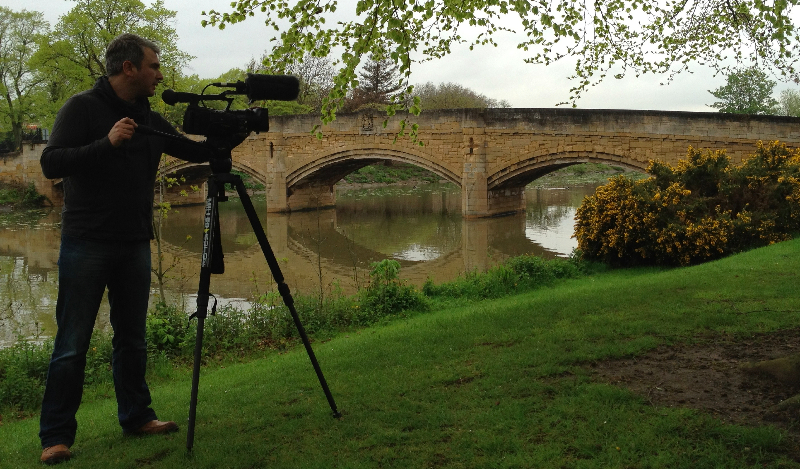
There's a new section for video content too. We will be producing more video material over the coming weeks including a Q&A video interview, with a senior industry executive or commentator every fortnight. Suggestions for this are always welcome.
|
|
||||||||||||||||||||||||||||||||||||||||||||||
|
This Month
Month Archive
Login
|
Tuesday, June 17
by
Stephen Pritchard
on Tue 17 Jun 2008 08:58 AM BST
Monday, May 12
by
Stephen Pritchard
on Mon 12 May 2008 08:18 PM BST
(This post first appeared on www.stephenpritchard.com so apologies for cross posting).
The FT is making some changes to the Digital Business website -- apologies if you have already heard of these via the Digital Business email update. (NB: anyone who doesn't receive these, and would like to, can sign up by clicking here). Chief among the changes, from a reporting point of view, is that the Digital Business podcast will now be weekly. So I will be on the lookout for suitable interviewees -- often, though not always, related to the content of the print issue. Click here to listen to the most recent edition for an idea of what we are looking for. As a guide, material can be recorded some way in advance. Up to three months ahead is probably realistic for themes that are already on the advanced synopses, or for CEOs and other senior industry figures. However, subjects and topics don't always have to follow the synopses exactly. I have found -- and this is my experience, not necessarily that of other writers or of the editor -- that a lighter take on topics works well. I try to apply the "treadmill" test: would I want to listen to this in the gym? Please do contact me if you want to find out more.
by
Stephen Pritchard
on Mon 12 May 2008 07:56 PM BST
I am going to be chairing this conference, which takes place on 19 and 20 May in Brussels. There's a detailed list of sessions here. Registration is still open -- as is press registration which is free of charge. If any colleagues want press registration please email me and I can arrange an invitation.
I would also love to hear from anyone who has any tough questions they would like me to put to the panelists. Again, please drop me an email using the usual contact details. more » Monday, April 14
by
Stephen Pritchard
on Mon 14 Apr 2008 02:37 PM BST
Over the next few weeks (starting April 15) I will be doing some additional work for IT Pro, where I am a contributing editor.
I will be helping to manage the site's news content, so I will be on the lookout for appropriate stories. The site's focus is on IT in enterprise and mid-sized companies. If you have any ideas (rather than simply press releases) please email them to me at the usual address, but put IT Pro: [the subject of the news etc] in the subject field. Best not to email images etc at this stage, we'll let you know if you need those. If you need to reach me by phone, I will be contactable via the main Dennis number (0207 907 6000), on my usual mobile number, or by leaving a message on my main work number. But it's always best to email too as I will be splitting my time between meetings, the IT Pro offices and my office. Stephen Saturday, March 29
by
Stephen Pritchard
on Sat 29 Mar 2008 04:48 PM GMT
In case anyone hasn't seen this in the print edition or on stephenpritchard.com, click here to see my recent piece in PR Week arguing against PROs targeting bloggers. Bite PR's Robin Wilson puts the case in favour...
NB: the link to this piece will only for PR Week subscribers only, sorry Friday, February 29
by
Stephen Pritchard
on Fri 29 Feb 2008 05:44 PM GMT
Hi there
We are making some changes. Over the next few weeks ens: media will undergo something of a relaunch (and with it, there will be a few tweaks to this website and blog too). In the short term, comment on the technology and media landscape will be moving over to my other site, stephenpritchard.com. The changes have been prompted by the growing proportion of my work that is based around broadcasting in its various forms. As broadcast work cuts across both editorial and commercial areas, it makes sense to bring those together in one place. Information about my writing, for print and on the web, will be concentrated on stephenpritchard.com; that site will continue to carry links to recently-published articles (as well as to editorial video and audio content). Meanwhile, in response for a growing number of requests for quotes for video work, we've put together a fixed-price package based on a day's filming. To view the pdf please click here (or right-click to download it). Stephen Tuesday, February 19
by
Stephen Pritchard
on Tue 19 Feb 2008 06:56 PM GMT
Following Mobile World Congress I've posted a short video package with a few interesting mobile companies, all backed by investment house 3i, on www.stephenpritchard.com.
If you want to jump straight to the video, please use this link. As ever any feedback is welcome. Sunday, February 10
by
Stephen Pritchard
on Sun 10 Feb 2008 02:51 PM GMT
It feels as if CES has only just finished, but it's already time to head to Barcelona for Mobile World Congress.
This year, much of the emphasis has been on publishing stories prior to the show. For a few examples, see these links: Aside from that, I will be meeting with a number of CEOs and investors to look at future trends in the industry, with features and analysis stories appearing over the next couple of months. In the meantime, I am also looking for interesting angles for the Did IT work slot and the green technology feature in Digital Business, as well as CEOs interested in talking about how their companies use technology. NB: these should be outside the tech sector itself. Saturday, January 12
by
Stephen Pritchard
on Sat 12 Jan 2008 11:51 PM GMT
This post first appeared on my website stephenpritchard.com. Apologies for cross posting if you've already seen it there.
So, CES is over for another year. The view on the show floor – and from many of the analysts and press attending – is that this year’s event was rather underwhelming. It’s not that it wasn’t busy, although organisers the Consumer Electronics Association actually wants to reduce numbers, not least to relieve pressure on hotel rooms. A less congested CES would be a good thing. But the show faces growing competition, at least among Europeans, from Berlin’s IFA . Samsung’s decision to launch its F490 touch screen phone in Europe first (and during CES) suggests that CES cannot take its leading position for granted. But there was useful content at CES: Verizon’s Voyager touch-screen, mobile TV ready phone was one. For businesses, one highly relevant device was Seagate’s Maxtor Black Armor encrypted drive (see story here for more) was another. It was more that other news overshadowed the products on display. Warner’s decision to back the Blu-Ray HD standard, speculation about Apple’s product launches next week and BT’s deal with Microsoft to create a version of the Xbox that doubles as a set-top box for its Vision service were the real stories. But you can still bet it will still be pretty hard to get a hotel room – let alone a cab – at CES next year. Wednesday, November 7
by
Stephen Pritchard
on Wed 07 Nov 2007 03:39 PM GMT
I thought I should post a quick reminder on deadlines, especially those for the FT. I've had quite a few calls and emails today and in the last two days offering commentary for pieces in FT Digital Business. To be absolutely clear, the deadline on the synopsis published by the FT is the journalist's deadline for submitting his or her copy. Any PR pitches need to reach me well in advance of that -- ideally at least two weeks before.
My copy deadline for the next issue (Dcember 5) is November 21st. So really, your pitches, ideas and suggestions for interviews for that issue need to reach me today... Realistically, now is a good time to start looking at the synopsis for the January and February issues, which are on site now. thanks! Stephen Wednesday, September 5
by
Stephen Pritchard
on Wed 05 Sep 2007 07:05 PM BST
A few people asked recently about our facilities for various types of media production. So, here's a summary or shameless plug, depending on your point of view...
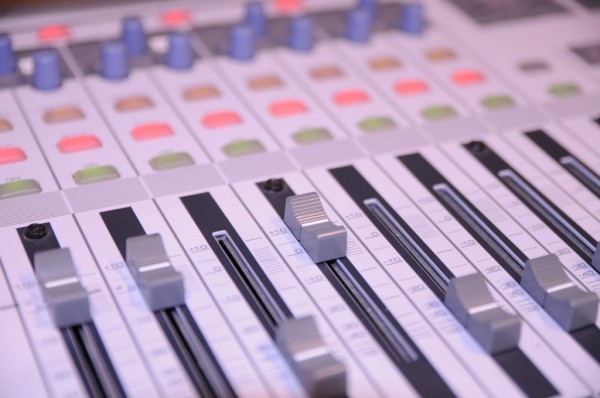
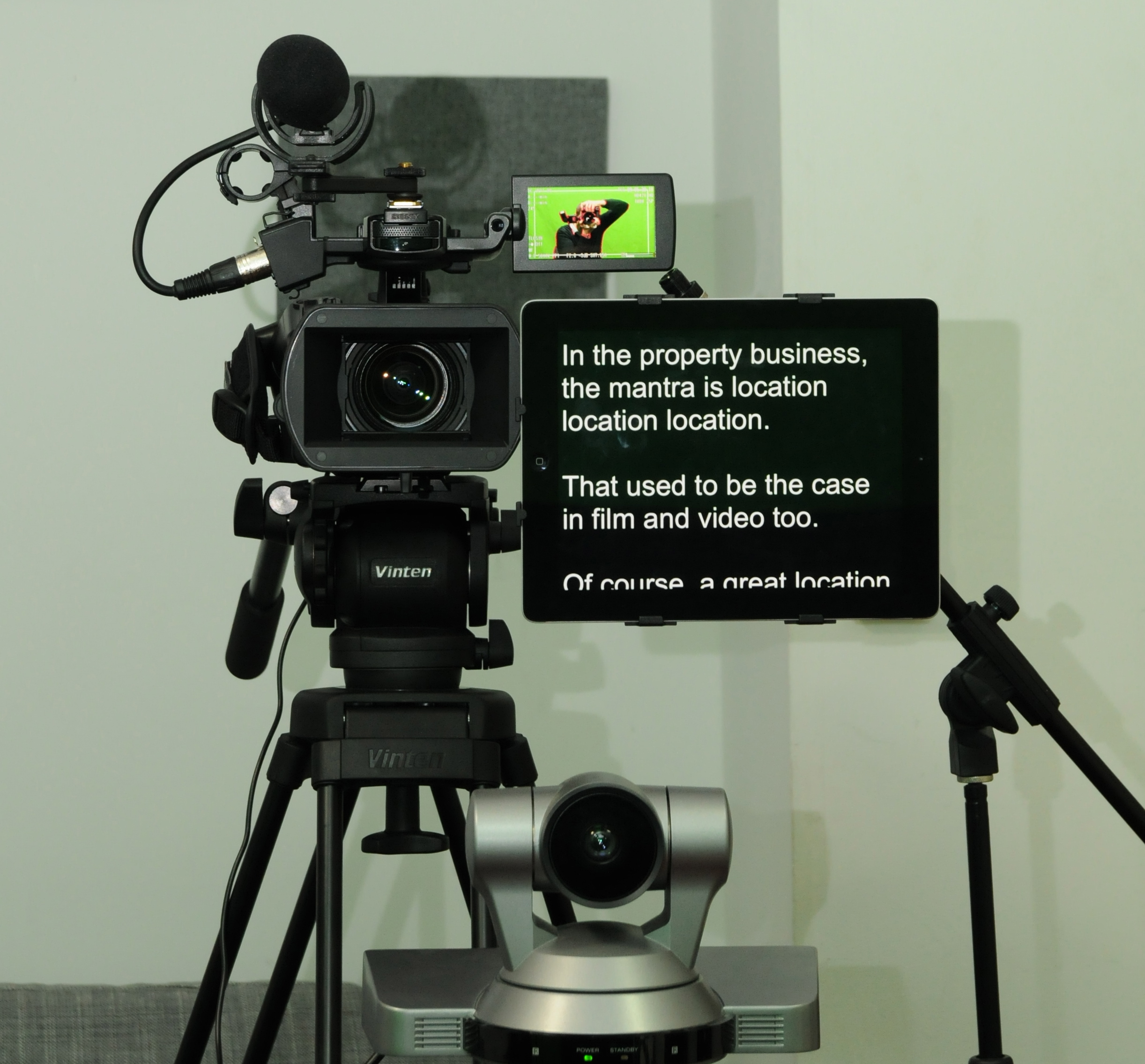
ens can take on most types of broadcast work, from hosting a simple down the line radio interview to producing a full documentary. We have recently upgraded the production set up here to be able to take on small editorial or commercial projects in house. Working with three production companies in the UK as well as several freelancers also gives the scope to handle larger projects or live events. Currently we have in-house facilities to run a single camera video shoot or record a podcast with up to four participants -- or two remote participants over ISDN (for the tech-heads, our gear uses the G722 codec). Audio and video editing is also in house. Most of the equipment, save for the ISDN gear, is portable so it can also be set up at your premises or a client's. Broadcast and online multimedia work does vary enormously in scope, of course, so it's always worth emailing or calling to talk through a project. But as a guide, recording a simple project in a day at our offices (in Kingston, Surrey) would start at £600. We are actively looking at expanding these facilities further if there's enough demand to support it, so I'm starting to scout out new office locations (any suggestions or advice most welcome). But why come to us rather than go directly to a production company? What can we offer? The answer is that we bring editorial expertise to any project. A production company will deliver excellent craft skills (lighting, sound, editing and so on) but if the script's wrong and the questions aren't right the end result will be less good than it could be, or take a age to edit together. PS: the service is not restricted to PR or other commercial work; we are very happy to provide broadcast content for publishers on an exclusive or syndicated basis. Tuesday, August 7
by
Stephen Pritchard
on Tue 07 Aug 2007 04:59 PM BST
(Updated 06 09 07)
I posted a whinge here a couple of months ago about the poor quality of many of the PR pitches I'm sent. I thought that I would replace that piece with a few guidelines on what I am looking for in story ideas. Note: this is what I find works for me; it might be that other writers for the titles concerned will have different views. FT Digital Business (Updated 06 09 07): A quick note on deadlines The FT publishes deadlines for its special reports on the online synopses. These deadlines are almost always the deadlines for the writers to submit their work. For FT Digital Business these are around a fortnight prior to publication. Often I am working on several stories for the section, so I aim to complete all my research at least a week before the deadline, and ideally, two weeks prior. So please aim to pitch any ideas well in advance of the published deadline. And remember that running orders can and do change from time to time.
More on this subject later... Monday, July 2
by
Stephen Pritchard
on Mon 02 Jul 2007 06:45 PM BST
My other website, stephenpritchard.com has a new home.
The site will provide links to recent work, details on my journalism activities, and a blog. In this case, the topic matter will be the areas on my journalistic beat: business, technology, new media and from time to time, science. This site will continue to host my occassional thoughts on the (tech) media space, as well as information and contact details for ens. Friday, April 27
by
Stephen Pritchard
on Fri 27 Apr 2007 12:13 AM BST
Los Angeles is not a bad place to be thinking about the future of TV. I have just spent a couple of days in California looking at Verizon's V Cast Mobile TV -- otherwise known as Qualcomm's MediaFLO system.
Whatever the technical merits of the different systems for mobile TV, the MediaFLO technology does work well. It's also easy to see why people might want TV on their mobiles. For anyone with even a passing interest in planes, LAX is a good a place as any to kill a few hours, especially from the comfort of the Air New Zealand/Virgin lounge. But if you don't want to try to spot DC10s, being able to catch up with the news, or even 24, is qn attractive alternative and likely to be worth a few dollars of anybody's money. I will post a link to the mobile TV story here when it's published. In the meantime, I will be looking at how the proliferation of new multimedia devices -- phones, video iPods and even games consoles -- are likely to affect not just our viewing habits but programme makers too. When Fox commissioned its "Mobisodes" of 24 -- distributed on Verizon and Vodafone -- the directors had to lighten the "look" of the programme and also change the camera angles, with more close-up footage and headshots, according to Mitch Feinmann, Fox Mobile's senior vice president. How long will it be before script writers and directors start considering very small screen content from teh start of the creative process? Thursday, March 29
by
Stephen Pritchard
on Thu 29 Mar 2007 11:35 AM BST
A journalist colleague made an interesting suggestion this week: why not film all our face-to-face interviews?
It is a good point. There seems to be growing interest in video content on the Internet, as the success of YouTube shows. But it is less clear how much interest there would be in business-oriented content. A few years ago (seven years ago, to be precise) the publisher I worked for commissioned a series of 10 minute documentaries. These were enormously fun to do, and were used in part to launch Freeserve’s broadband portal. But even broadband users struggled to view the content. The bandwidth issue has more or less been solved, at least from the viewer’s point of view. The main flaw in my colleague’s suggestion is that bandwidth for streaming out the content, or even making it available for download, is still relatively expensive and certainly out of reach of an individual journalist. Nor is streaming software cheap – assuming you want to do more than just let people download a media file. None the less, as an exercise in newsgathering and content generation, it has to be worth a try. I suspect that some PROs will look askance at a reporter turning up with a video camera (and we are not talking kit from Dixons here). But it is already common practice for Asian journalists to video their interviews. So why not here? Monday, March 19
by
Stephen Pritchard
on Mon 19 Mar 2007 04:27 PM GMT
One excuse for not updating this blog over the last few weeks has been planning for, then getting to and reporting on, CeBIT. (You can see some of the copy on http://www.itpro.co.uk - online has the advantage of a quick story turnaround, some print pieces will follow in the next several weeks).
It was hard to gauge the atmosphere at CeBIT this year. There seemed to be fewer real news stories around and perhaps fewer attendees – although it was still as hard as ever to find hotel rooms. Quite a few senior people at the show suggested that CeBIT was becoming more of a small and mid-sized business event. A focus on Germany’s famous Mittelstand would be no bad thing, according to many of the exhibitors. And there does seem to be a growing body of opinion that either CES or IFA, not CeBIT is the place to show new consumer gadgets. Tuesday, February 20
by
Stephen Pritchard
on Tue 20 Feb 2007 04:51 PM GMT
I admit that there are plenty of journalists' blogs out there complaining about PR.
There are of course some very good PR folk out there. But a couple of stories I've been working on this last few weeks have caused me to pose a few questions. What should a journalist do if a PR agency (or an in-house PR office) ignores repeated requests for information? This has happened a couple of times recently. One case was a trade body that completely ignored requests for information to help answer a reader's question (answered through the paper's pages). The publication: a "quality" national daily. In another case, three emails to a PR agency inviting input from a telecoms vendor for a piece have gone ignored over the last 10 days. The market segment is a key one for this vendor and the publication, a "tier 1" international title -- one of those that's meant to be top of any good PR's target list. I'm coming to the conclusion that if three emails are ignored I won't waste my time contacting that vendor or their agency again. I'm not counting people who email or call back to say they can't help, or are struggling with the deadline or other more or less reasonable excuses. I am talking about people who send no response at all, even a simple acknowledgement. (Often these people don't return calls either, but the nature of the industry is that email is often the most convenient initial means of contact.) If you don't respond to my queries, am I really going to read your press releases? Friday, January 19
by
Stephen Pritchard
on Fri 19 Jan 2007 02:16 PM GMT
I'll be taking a little while off - and have attached a picture of the reason why :) See Photos on the left.
Our second son Zach arrived at 10.35pm on Thursday 18th January. I will be back early February thanks Stephen Monday, January 15
by
Stephen Pritchard
on Mon 15 Jan 2007 05:03 PM GMT
I was recently asked to put together some guidelines for PR folk on the ins and outs of podcasts.
In due course, I plan to put a summary here for download. In the meantime, though, here are a few observations: - There are probably more sponsored or advertorial podcasts than genuine editorial pieces out there right now; - The quality of the editorial podcasts varies enormously, at least in business journalism; - Production values are often not very high. Some people say production values don't matter if the message is strong enough. This might be the case for some community-driven content but I don't think it applies in the business arena. Poor recording or encoding detracts from teh message, whether you are an advertiser or an editor; - Most podcasts are far, far too long. Anything more than six to eight minutes would be a very long feature in radio. Listen to a news or current affairs radio show -- how long is each part? An hour long show will comprise of several "packages" as well as studio links, guest slots etc. The best podcasts I've heard make at least some effort to break up the programming in this way. - You don't need very expensive equipment to record a podcast. You do need a good mic, decent headphones and really, some form of script. - If you are planning advertorial or sponsored podcasts, would five six minute episodes work better than one half hour slot? There will be more on this subject later so do come back and check again. Friday, January 12
by
Stephen Pritchard
on Fri 12 Jan 2007 09:21 AM GMT
Hi, welcome to the ens blog...
As some of you will know, I have been (and remain) quite sceptical about the value of journalists' blogs. It is a huge generalisation, of course, but blogs tend to long on opinions and rather shorter on facts. But blogs are a good way to keep in touch with a wider group of industry contacts than I can hope to by phone or email. And frankly it is far easier to update these pages than fiddle about with a web site. This blog will concentrate on developments in the media business itself, and will include updates on projects I'm working on or find interesting. In time, there will be a separate blog covering my main fields of journalism -- technology/IT and finance -- on www.stephenpritchard.com. There is a fairly rudimentary website there at the moment, so please come back for updates. Another factor in favour of a blog, over a static web site, is interactivity. So please do post comments on anything here that takes your interest. thanks Stephen Wednesday, January 3
by
Stephen Pritchard
on Wed 03 Jan 2007 11:29 AM GMT
Welcome to the blog. This is a test. more »
|
Recent Entries
Search
|
||||||||||||||||||||||||||||||||||||||||||||